
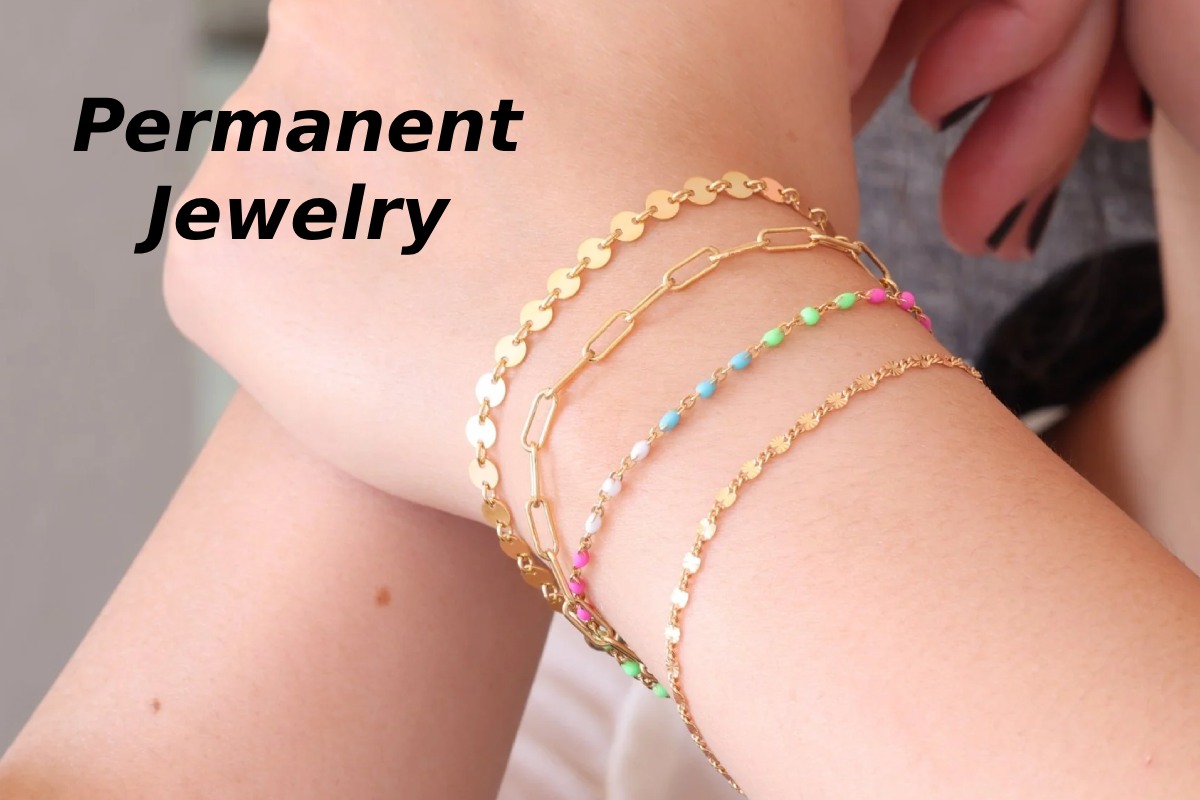
Permanent jewelry refers to bracelets, necklaces, or anklets that are welded or soldered directly onto the wearer’s body without a clasp. Unlike traditional jewelry, it cannot be removed easily and is designed to be worn continuously, 24/7.
It’s often made with gold, sterling silver, or other durable metals, and is popular as a symbol of commitment, friendship, love, or personal milestones.
Table of Contents
What are Permanent Jewelry?
Permanent jewelry is a piece (usually a necklace or bracelet) soldered together as a substitute for being secured with a clasp. Just as there are many reasons why people wear regular jewelry, there are different reasons why they choose to wear permanent jewelry.
Our customers love Forever bracelets to mark special occasions and add refined, simple jewelry to their everyday lives. Whether you want to mark the birth of a child or avoid having to tighten and remove your bracelet daily, a permanent piece of jewelry may be right for you.
How Permanent Jewelry Works
- Custom Measurement
- The jeweler first measures your wrist, neck, or ankle very precisely.
- Proper sizing is essential because the jewelry will remain permanently closed after application.
- Choosing the Material
- Permanent jewelry is usually made from durable metals like:
- 14k or 18k gold
- Sterling silver
- Rose gold or plated metals
- Design Selection
- Simple chains, links, or personalized charms are chosen.
- Some designs may include initials, birthstones, or symbolic charms.
- Welding or Soldering
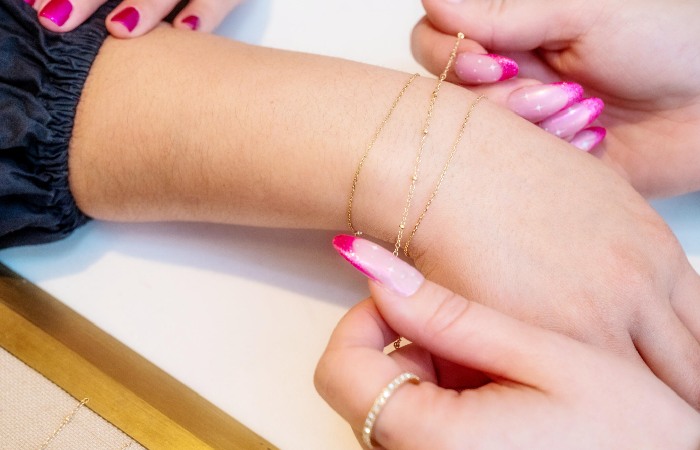
- The jeweler uses a special portable welding tool or torch to close the chain around your body part.
- This process creates a seamless loop with no clasp, making the jewelry permanent.
- Permanent Wear
- Once welded, the jewelry cannot be removed by hand.
- Professional removal requires cutting or breaking the metal, ensuring the piece stays secure and continuous.
- Finishing Touches
- The jewelry may be polished for shine.
- Some jewelers check the fit again to ensure comfort and safety for everyday wear.
Popular Types of Permanent Jewelry
| Type | Description | Common Uses |
| Bracelet | A chain welded around the wrist without a clasp | Friendship bracelets, couple bracelets, personal milestones |
| Necklace | A chain welded around the neck | Everyday wear, symbolic or personalized necklaces |
| Anklet | A chain welded around the ankle | Trendy fashion statement, subtle permanent accessory |
| Custom Designs | Personalized pieces with charms, initials, or symbols | Birthdays, anniversaries, meaningful gifts |
| Layered Chains | Multiple chains welded together in a single piece | Fashion-forward style, stacking jewelry look |
Buy Permanent Jewellery Online In India
| Product | Type | Approx. Price (₹) | Notes |
| GIVA Jewellery Personal Eternal Necklace | Necklace (Personal) | 2,599 | Tough jewellery, ideal for daily wear |
| Neerajyoti Stainless Steel Bracelet | Bracelet (Stainless Steel) | 703 | Good ordinary piece; stainless steel lasts longer |
| Heart Shape Color Photo Necklace | Practice Photo Necklace | 1,799 | Meaningful wear jewellery |
| Rubans Faux Emerald Stone Studded Zircon Jewellery Set | Zircon Stone Set | 457 | Affordable fashion jewellery |
| Rubans Women’s Studded Baguette Necklace Set | Necklace Set | 1,078 | Stylish set for casual/daily occasions |
| IGP Gifts CZ Pendant Drop Earrings Necklace | Pendant + Earrings | 1,499 | Good gift option |
| Yellow Chimes Ethnic Gold Plated Long Necklace with Earrings | Long Necklace + Earrings | 1,019 | Gold-plated set |
| Zaveri Pearls Bridal Kundan Necklace Earring | Kundan Set | 1,152 | Traditional style |
Permanent jewelry price in India, the UK, the USA, and London
Here’s a comparison table with typical Permanent Jewelry pricing ranges in India, the UK, the USA, and London (UK). Permanent jewelry refers here to custom-fit welded bracelets/anklets/necklaces without clasps — prices vary widely by metal type, location, and jeweler:
| Region | Metal / Type | Bracelet Approx. Price | Notes / Other Pieces |
| India | Welded permanent jewellery | From ~₹3,499+ | Example from SilGold Luxury in New Delhi from ₹3,499 (~basic silver/steel) — actual prices vary by store, metal & size (custom welding) |
| UK | Sterling Silver | ~£45–£60+ | Typical UK boutique prices for bracelets; higher for gold-filled or solid gold |
| Gold-Filled | ~£65–£75+ | Price varies with finish and jeweller | |
| 9ct or 14ct Gold | ~£120–£210+ | Solid gold costs significantly more | |
| London | Sterling / Gold-Filled | ~£55+ | Example London actions with bracelets ~£55+, jewelries extra |
| USA | Sterling Silver / Gold-Filled | ~$40–$150+ | Typical pricing choices by U.S. jewelers (e.g., ~$40+ for jewels) |
| 14k Solid Gold | ~$80–$399+ | U.S. welded permanent jewellery often costs $289–$399 for a solid 14k gold bracelet |
What are the Cons of Permanent Jewelry?
- Cannot Be Removed Easily
- Once welded, permanent jewelry cannot be taken off by hand.
- Removal requires a jeweler to cut or break the piece, which may be inconvenient or irreversible.
- Commitment Required
- You are stuck with the piece until professional removal.
- If tastes change or the jewelry becomes uncomfortable, you cannot simply remove it like traditional jewelry.
- Potential for Discomfort
- If sizing is slightly off, it may feel tight or loose, causing discomfort over time.
- Daily activities (typing, sports, manual work) can sometimes make permanent bracelets or anklets less comfortable than removable jewelry.
- Limited Adjustability
- You cannot resize welded jewelry easily.
- Changes in wrist, neck, or ankle size (due to weight fluctuation, pregnancy, or growth) may make the piece too tight or loose.
- Risk of Allergic Reactions
- Metals like nickel or lower-quality alloys may cause skin irritation or rashes.
- Hypoallergenic metals (gold, sterling silver) are recommended to minimize risk.
- Professional Maintenance Needed
- Any repairs, polishing, or removal requires professional tools.
- You cannot fix a broken chain at home easily.
- Safety Concerns
- Jewelry that is too tight can cut off circulation or get caught on objects.
- Accidents like snagging on clothing or equipment can potentially damage skin or jewelry.
- Cost Consideration
- Professional welding, removal, or repair can be more expensive than traditional jewelry.
Trends of Permanent Jewelry (2026)
| Category | Trends in 2026 | What It Means |
| Mixed Metals | A combination of gold, silver, rose gold, and steel in one aspect | Encourages varied layered enduring pieces or mixed-metal welded sets. |
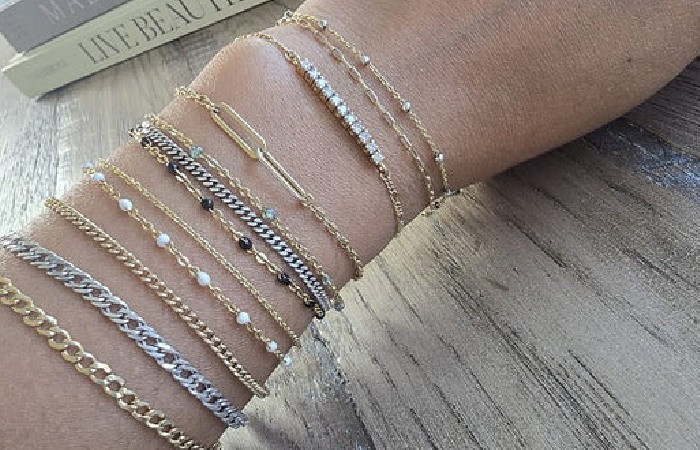
| Stacking & Layering | Covered jewels, anklets, and necklaces | Wearers create tailored stacks of welded everlasting jewelry. |
| Charms & Personal | Modified engravings or symbolic charms on chains | Personalized welded charms and initials are popular. |
| Bold Sizes & Chunky Chains | Bushier links and visible chains | Permanent bracelets are trending toward impactful chain styles. |
| Colored Jewels & Inflections | Addition of birthstones, lab-grown rhombi, or colored stones | Adds color and uniqueness to continuing pieces. |
| Sustainability & Ethical Metals | Secondhand alloys and ethical sourcing | Consumers settle toward answerable jewelry. |
| Organic Shapes & Modelled Forms | Irregular, flowing designs | Trend moves beyond negligible chains to more artistic pieces. |
How Long does Permanent Jewelry Last?
As its name suggests, it is meant to last forever. But that’ll likely come off unexpectedly after some time because life happens. After wearing my permanent bracelets for a few months, one recently came off when I was at home doing everyday things. It’s a good thing I didn’t lose it, and I can take it back to the store to get it welded again.
Can you Remove Permanent Jewelry?
The point of permanent jewelry is to have it forever, but if you want to take it off for any reason, you can do it with scissors. Remember that you should cut it where the “jump ring” was welded — this is usually a larger circle than the rest of the chain links. You can weld it again at the store for a small fee.
Is Permanent Jewelry Safe?
From my experience, yes. The welding process ignited sparks from the machine’s heat, but the leather on my wrist protected it, and I didn’t feel a thing.
The bracelets are comfortable on my wrist for everyday wear and feel as light as a feather. Be careful if you’re sensitive or have allergies to certain materials, such as nickel, which gold can contain. If you’re unsure, you can have a patch test done by your doctor.
Many permanent bracelets are made of 14-karat gold. This material is durable, doesn’t tarnish, and can be enough to avoid a skin reaction. Or you can go for options such as 18-karat, which typically contains a smaller amount of nickel, or 24-karat gold (pure gold).
Materials Used in Permanent Jewelry
| Material | Type / Description | Key Properties |
| Sterling Silver | Alloy: 92.5% silver + other alloys | Classic bright finish; affordable; may tarnish over time; clean regularly. |
| Gold-Filled | Thick layer of real gold bonded to base metal. | More durable and reasonable than solid gold; looks like gold; resists tarnish better than plating. |
| Solid Gold (10K, 14K, 18K) | Pure gold mixed with alloys for strength | Luxurious, durable, and tarnish-resistant; price surges with karat level. |
| Stainless Steel | Alloy with chromium (often 316L surgical grade) | Very robust, corrosion- and tarnish-resistant, hypoallergenic, appropriate for average use. |
| Titanium | Lightweight metal with high asset | Highly tough and hypoallergenic; good for sensitive skin. |
| Platinum | Dense, precious metal | Best choice; extremely durable and hypoallergenic; higher cost. |
| Alternative Metals (Copper/Brass) | Base alloys that the craftsperson uses | More rational but may tarnish or react; less common for perpetual chains. |
Gold vs Silver for Permanent Jewelry
| Characteristic | Gold Permanent Jewelry | Silver Permanent Jewelry |
| Cost | Meaningfully more expensive (rarer metal, high market worth) | Much more reasonable and budget-friendly overall |
| Strength / Tarnish | Outstanding confrontation to tarnish and corrosion; holds shine longer | Prone to tarnish from air/moisture and needs regular improvement |
| Conservation | Minimal cleaning is needed to retain the entrance | Higher regular outstanding and care to prevent tarnish |
| Advent / Style | Warm, classic, luxurious look; numerous hues (yellow, white, rose) | Cool, sleek, current look; bright white shine |
| Skin Sensitivity | Typically very good with high-karat gold; fewer allergic reactions | Sterling silver can be comfortable, but it is often irritating due to the alloy metals |
Conclusion
After two months of enduring bracelets, I can say this: I would feel bare without them. I love not having to put them on and take them off. Even if I want to wear additional bracelets, they layer agreeably with additional panaches since they’re so multipurpose. Another perk: you won’t have to worry about being behind the pieces since they’ll continually be by your side.
