

Weight Lose – Contrary to popular belief, counting calories and avoiding carbs aren’t always necessary steps to take when it comes to changing your body. There are sufficient healthy and sustainable ways to help reduce bloating while feeling more fit, if that’s your goal, without depriving yourself of the occasional bagel or bowl of ice cream. Besides, according to experts, weight loss is not the same as fat loss.
Table of Contents
What to Do Weight Lose?
Losing weight requires a combination of healthy eating, regular physical activity, and consistent lifestyle habits. The goal is to burn more calories than you consume while maintaining good nutrition.
| Strategy | What to Do | Benefit |
| Eat a Balanced Diet | Include vegetables, fruits, whole grains, lean protein, and healthy fats | Provides essential nutrients while controlling calories |
| Reduce Portion Sizes | Serve smaller portions and avoid overeating | Helps reduce daily calorie intake |
| Exercise Regularly | Do activities like walking, cycling, or strength training for 30–60 minutes daily | Burns calories and improves metabolism |
| Drink More Water | Drink water before meals and throughout the day | Helps control appetite and supports digestion |
| Limit Sugar and Junk Food | Reduce foods high in sugar, fried foods, and processed snacks | Prevents excess calorie intake |
| Eat More Fiber | Consume foods like oats, vegetables, fruits, and legumes | Keeps you full longer and improves digestion |
| Get Enough Sleep | Aim for 7–8 hours of sleep every night | Poor sleep can increase hunger hormones |
| Manage Stress | Practice relaxation techniques like yoga or meditation | Reduces emotional eating |
| Track Your Food Intake | Keep a food diary or use a health app | Helps monitor calorie consumption |
| Stay Consistent | Maintain healthy habits over time | Leads to long-term weight loss success |
How to Lose Belly Fat Effectively?
Losing belly fat requires a grouping of smart nutrition, even exercise, and healthy lifestyle habits rather than quick-fix solutions. Focusing on a stable diet rich in whole foods, lean proteins, fiber, and healthy fats helps reduce overall body fat while curbing excess calorie intake. Plummeting sugary drinks, refined carbohydrates, and processed foods is particularly vital because they contribute to stomach fat storage. Regular physical activity, such as cardio, strength exercise, and core workouts, helps burn calories, boost metabolism, and tone stomach muscles.
Tips to Weight Lose but Without Dieting
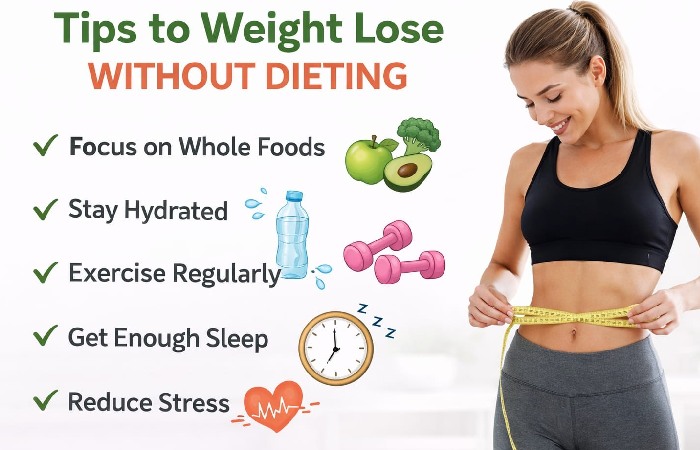
Weight Loss There are tips and tricks for losing weight that have nothing to do with strict dieting or counting calories. And when it comes to losing a little weight and reducing inflammation, changing your eating habits and increasing exercise is often enough.
“Small weight loss can often be achieved simply by improving certain (bad) habits that we have at the table, in the kitchen, while shopping or in the restaurant,” says dietitian and nutritionist Magda Carlas, author of the book The Diet Can Wait’ (Dome Books). While we don’t need to lose weight, reviewing our habits can help us regain balance, eat more mindfully, and learn the keys to a healthy meal that we can practice daily.
Reduce the hours Between Meals
In Spain, we spend more than four hours between breakfast and lunch or lunch and dinner. We also eat late and sleep fewer hours than necessary. According to Carlos, the consequence of all this is that we have an excessive appetite between meals, a greater predisposition to obesity, a decrease in the effectiveness of the immune system and our physical and mental performance, and lower cognitive performance. Eating dinner two hours before bedtime and including foods with tryptophan in that last meal of the day are two tricks for better sleep practiced by people who rest quickly.
Snacks That Can Help Us
Choose a whole piece or pieces with skin (if possible) among the best fruits to lose weight. “It is important that the fruit is not very ripe and needs to chew a little,” advises the nutritionist. Another good suggestion is to mix yoghurt with fruit, take nuts, which “have a very high satiety power and a shallow glycemic index” but in doses of 20 or 30 grams and always toasted or natural (not salted, not fried, still with honey).
Eat Mindfully and More Slowly
We eat in less than 10 minutes in front of the computer or in environments too loud, overwhelming, or uncomfortable (because of the company or the conversation). It is not for nothing that 4% of the population in Spain suffers from binge eating disorders and 2-3% from bulimia. Also, eating too fast makes us swallow more air, eat more, feel less whole and lead to digestive disorders such as bloating, constipation, gas, abdominal pain, gastritis or ulcers, lists Carlas.
Tips For Conscious Eating
Eating foods that require shelling—shellfish—chewing and shredding slows the eating pace in small cutlery containing a smaller amount of food. You must try to eat in at least 20 minutes, never less in a quiet and pleasant atmosphere and with good company. Drink liberally – sparkling water with a few drops of lemon juice and ice to reduce appetite. And you must try to relieve nervousness and anxiety by listening to soft music (classical, jazz, soul, or blues) or taking relaxing valerian or lemon balm infusions, which also help you fall asleep quickly if taken at night.
Check the amounts of food
“Quantities can be the origin of numerous nutritional errors and possibly in many cases, one of the causes of obesity,” says the expert. We tend to eat more-than-desirable portions of pasta, cereal, and meat, use more-than-desirable amounts of dressings, and conversely, under-eat fish or raw vegetables without forgetting that “in Spain, salt is consumed twice as much as recommended” and that the consumption of sugar and light products is excessive.
How Can You Have More Control Over The Amount Of Food We Eat?
| Strategy | Description | Benefit |
| Portion Control | Measure or divide food into appropriate portions before eating | Helps prevent overeating and supports weight management |
| Eat Slowly | Take time to chew food thoroughly and eat at a slower pace | Gives the brain time to signal fullness |
| Use Smaller Plates | Serve meals on smaller plates or bowls | Makes portions appear larger and reduces the tendency to overeat |
| Plan Meals in Advance | Prepare or schedule meals ahead of time | Prevents impulsive eating and unhealthy food choices |
| Avoid Distractions While Eating | Do not watch TV or use phones during meals | Helps focus on hunger and fullness signals |
| Drink Water Before Meals | Drink a glass of water before eating | May reduce hunger and prevent overeating |
| Include Protein and Fiber | Add foods rich in protein and fiber to meals | Keeps you full for longer periods |
| Keep Healthy Snacks Available | Store fruits, nuts, or yogurt instead of junk food | Encourages healthier eating habits |
| Maintain Regular Meal Times | Eat meals at consistent times each day | Helps regulate appetite and metabolism |
| Practice Mindful Eating | Pay attention to taste, texture, and hunger cues | Promotes better awareness of how much food you need |
Home Remedies That Support Natural Weight Lose
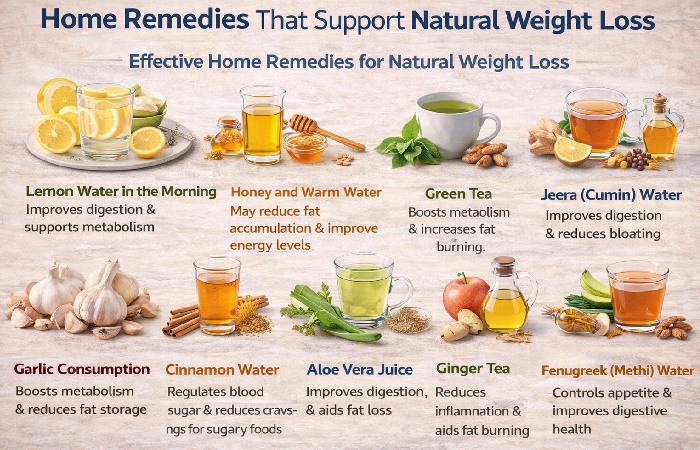
Natural home remedies can support weight loss by refining digestion, boosting metabolism, and helping the body burn fat more efficiently. While they are not quick fixes, combining these remedies with a stable diet and regular workout can enhance results securely and sustainably. Many traditional remedies use readily obtainable kitchen ingredients that promote detoxification, reduce swelling, and help control hunger. Constancy is significant, as natural methods work slowly to improve overall health and weight organization.
Lemon Water in the Morning
Drinking warm lemon water on an empty stomach helps improve digestion, cleanses the body, and supports metabolism.
Honey and Warm Water
A mixture of honey and warm water may help reduce fat buildup and replenish energy levels when they are frequently spent.
Green Tea
Rich in antioxidants, green tea helps boost metabolism and upsurges fat burning, particularly during exercise.
Jeera (Cumin) Water
Soaked cumin seeds, when bubbled in water, improve digestion, reduce bloating, and aid in fat breakdown.
Apple Cider Vinegar Drink
Diluted apple cider vinegar may help suppress hunger and stabilize blood sugar levels.
Ginger Tea
Ginger improves digestion, reduces irritation, and helps the body burn calories more efficiently.
Garlic Consumption
Raw garlic may boost metabolism and help decrease fat storage.
Cinnamon Water
Cinnamon helps control blood sugar levels and reduces the desire for sugary foods.
Aloe Vera Juice
Aloe vera leaf ingestion improves metabolism, promoting slow fat loss.
Fenugreek (Methi) Water
Sodden fenugreek seeds help regulate appetite and improve digestive health.
Effective Exercises to Burn Fat Quickly for Weight Lose 2025
Burning fat efficiently requires a combination of high-intensity workouts, strength training, and reliable physical activity. Movements that engage multiple muscle groups help the body burn more calories in less time while improving metabolism. High-Intensity Intermission Training (HIIT) is especially effective because it alternates short bursts of all-out effort with brief rest periods, keeping the body in fat-burning mode even after the workout ends.
| Exercise | How It Helps in Fat Burning | Ideal Duration |
| Brisk Walking | Improves metabolism and reduces injuries with steady calories | 30–45 minutes |
| Running/Jogging | Burns high calories and decreases body fat | 20–30 minutes |
| Cycling | Strengthens the lower body and burns fat | 30 minutes |
| Skipping Rope | Full-body workout with high calorie burn | 10–15 minutes |
| HIIT Workouts | Maximizes fat burn in a short time | 15–20 minutes |
| Strength Training | Builds muscle and boosts resting metabolism | 30–40 minutes |
| Jump Squats | Engages legs and core for high-calorie burn | 10–15 minutes |
| Mountain Climbers | Full-body cardio and core strengthening | 10 minutes |
| Burpees | Intense full-body exercise for rapid fat loss | 10 minutes |
| Swimming | Low-impact full-body fat-burning exercise | 30 minutes |
Weight Loss Tips for Busy Professionals
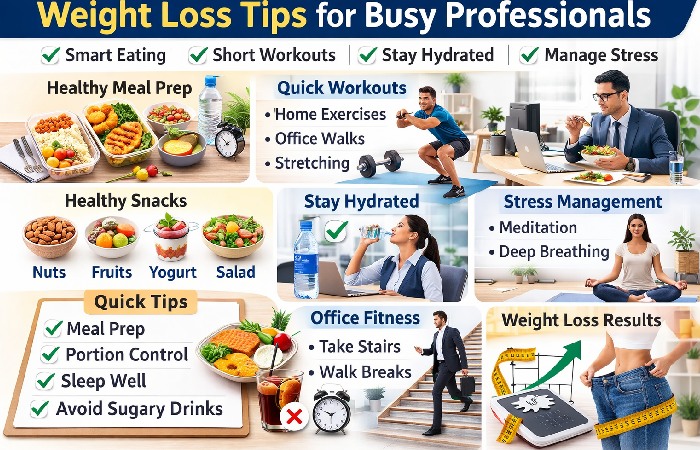
Maintaining a healthy weight can be challenging for busy specialists due to long working hours, sedentary routines, poor eating patterns, and high stress levels. With smart groundwork and small lifestyle changes, weight loss can be effectively achieved even with a tight schedule. The key is to adopt simple, maintainable habits that fit naturally into everyday events without needing major time commitments.
Plan Meals in Advance
Making meals ahead of time prevents dependence on fast food and unhealthy snacks.
Choose Healthy Snacks
Save nuts, fruits, yogurt, or protein bars handy to control hunger between meals.
Do Short Workouts
Participate in 15–20-minute home workouts or rapid fitness routines to stay active.
Walk During Breaks
Short walks during office breaks help burn extra calories and reduce stress.
Use Stairs Instead of Elevators
Uphill stairs is an easy way to add physical activity to your daily routine.
Stay Hydrated
Drinking enough water supports metabolism and helps prevent unnecessary snacking.
Avoid Sugary Drinks
Replace sodas and sweetened beverages with water, lemon water, or green tea.
Control Portion Sizes
Eating smaller portions helps manage calorie intake without strict dieting.
Manage Stress Levels
Practice meditation, deep breathing, or light stretching to prevent emotional eating.
Prioritize Quality Sleep
Proper sleep regulates metabolism and balances starvation hormones.
Healthy and Sustainable Weight Lose Strategies
Healthy, sustainable weight loss emphasizes long-term lifestyle changes rather than dangerous diets or quick fixes. The key is to create balanced habits that promote slow fat loss while maintaining overall health and potency. Eating a nutritious diet that comprises whole grains, lean proteins, fruits, vegetables, and healthy fats helps control calorie intake and keeps you fuller for longer. Regular physical activity, including a mix of cardio and strength exercises, boosts metabolism and helps preserve muscle mass during weight loss.
| Strategy | Benefits |
| Balanced Diet | Provides essential nutrients while controlling calories |
| Portion Control | Prevents overeating and supports calorie balance |
| Regular Exercise | Burns calories and improves metabolism |
| Strength Training | Preserves muscle and enhances fat loss |
| Drinking Enough Water | Supports digestion and appetite control |
| Proper Sleep | Regulates hormones that affect hunger |
| Stress Management | Reduces emotional and binge eating |
| Consistent Meal Timings | Maintains stable energy and metabolism |
| Limiting Processed Foods | Reduces excess sugar, salt, and unhealthy fats |
| Setting Realistic Goals | Encourages steady and maintainable progress |
Weight Lose for Women and Men: Special Considerations
Weight-loss strategies can differ between women and men due to variations in hormones, metabolism, body composition, and lifestyle choices. Men usually have higher muscle mass and metabolic rate, allowing them to burn calories faster, while women often experience hormonal differences that can affect fat storage and energy levels.
Women may also find it harder to lose fat in areas like the hips and thighs, whereas men usually store fat around the stomach. Nutritious needs, exercise responses, and health risks also vary between genders. Sympathetic to these differences, these differences help create modified weight-loss tactics that are safe, realistic, and maintainable for both women and men.
Special Considerations for Women
Hormonal Changes
Menstrual cycles, pregnancy, and menopause can affect metabolism and fat storage.
Lower Muscle Mass
Women typically have less muscle, which can slow calorie burning, similar to men.
Iron and Calcium Needs
Women require advanced intakes of iron and calcium for overall health.
Fat Storage Patterns
Fat is often stored in the hips and thighs, making targeted fat loss challenging.
Emotional Eating Tendencies
Stress and hormonal shifts may increase cravings and emotional eating.
Bone Health Importance
Strength training is essential to uphold bone density and muscle tone.
Special Considerations for Men
Higher Metabolic Rate
Men burn calories faster because of their greater muscle mass.
Abdominal Fat Storage
Men tend to store more visceral fat around the belly area.
Greater Muscle-Building Capacity
Strength training shows faster visible results in men.
Higher Calorie Requirements
Men generally need more calories to support body functions and activity.
Lifestyle Risk Factors
Smoke, alcohol consumption, and work stress may affect weight management.
Cardiovascular Risk
Extra belly fat increases heart disease risk, so even exercise is required.
Best Diet Plans for Fast and Safe Weight Loss
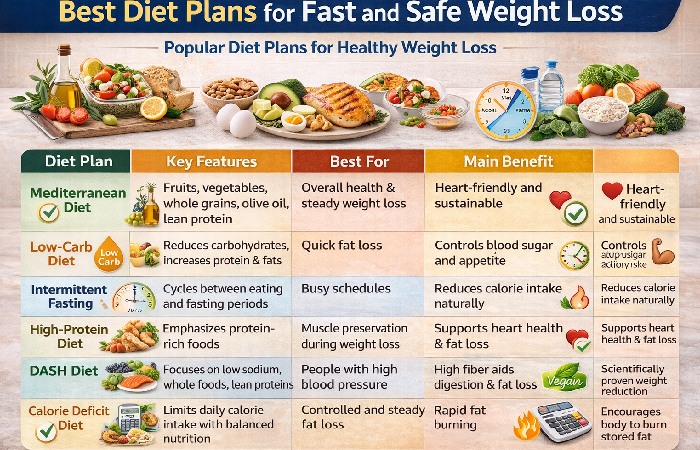
Choosing the right diet plan is essential for losing weight safely while maintaining proper nutrition and energy levels. A good weight-loss diet emphasizes stable meals, helps control hunger, and emphasizes nutrient-dense foods rather than extreme calorie restrictions. Diets rich in protein, fiber, healthy fats, and multifaceted carbohydrates help keep you full longer and steady blood sugar levels.
| Diet Plan | Key Features | Best For | Main Benefit |
| Mediterranean Sea Diet | Fruits, vegetables, whole grains, olive oil, lean protein | Overall health & steady weight loss | Heart-friendly and sustainable |
| Low-Carb Diet | Reduces carbohydrates, increases protein & fats | Quick fat loss | Controls blood sugar and appetite |
| Intermittent Fasting | Cycles between eating and fasting are | Busy schedules | Reduces calorie intake naturally |
| High-Protein Diet | Emphasizes protein-rich foods | Power preservation during weight loss | Keeps you full longer |
| DASH Diet | Focuses on low-sodium, whole foods, lean proteins | People with high blood pressure | Supports heart health & fat loss |
| Plant-Based Diet | Emphasizes vegetables, fruits, legumes, nuts, and seeds | Natural and clean eating lifestyle | High fiber aids digestion & fat loss |
| Calorie Deficit Diet | Limits daily calorie intake with balanced nutrition | Controlled and steady fat loss | Scientifically proven weight reduction |
| Keto Diet | Very low carbs, high fats, moderate protein | Rapid fat burning | Encourages the body to burn stored fat |
Foods to Avoid When Trying to Lose Weight
When trying to lose weight, avoiding high-calorie, low-nutrient foods is just as important as eating healthy meals. Many preserved and sugary foods add excess calories without vital nutrients, making it harder to support a calorie deficit. Foods high in refined sugars and harmful fats can slow metabolism, increase fat storage, and trigger cravings that lead to overeating.
| Food Type | Why to Avoid | Better Alternatives |
| Sugary Drinks (soda, sweetened juices) | High in empty calories and sugar spikes | Water, coconut water, lemon water |
| Fried Foods | High in unhealthy fats and calories | Grilled, baked, or air-fried foods |
| White Bread & Refined Flour | Low fiber causes rapid hunger | Whole-grain bread, oats |
| Pastries & Bakery Items | Loaded with sugar, refined flour, and fats | Nuts, seeds, homemade snacks |
| Fast Food & Burgers | High calories, sodium, and unhealthy fats | Home-cooked balanced meals |
| Packaged Snacks & Chips | High salt, preservatives, and trans fats | Roasted nuts, makhana, and fruits |
| Ice Cream & Sweets | Excess sugar and saturated fats | Dark chocolate (small portions), yogurt |
| Processed Meats | High sodium and preservatives | Fresh lean meats, eggs, legumes |
| Sugary Breakfast Cereals | High sugar and low fiber | Oatmeal, muesli, boiled eggs |
| High-Calorie Coffee Drinks | Hidden sugars and fats | Black coffee, green tea |
Medical Treatments and Surgical Weight Lose Options
For individuals who struggle to lose weight through diet and exercise alone, medical interventions and surgical procedures can provide effective replacements under professional management. These options are typically optional for people with obesity or weight-related health conditions such as diabetes, high blood pressure, or sleep apnea. Medical weight loss treatments may include medications that help control appetite, reduce fat absorption, or regulate metabolism.
| Treatment Option | Type | How It Works | Suitable For | Key Benefit |
| Prescription Weight Loss Medications | Medical | Suppress appetite or reduce fat absorption | Overweight individuals with health risks | Non-surgical weight management |
| Meal Replacement Therapy | Medical | Replaces high-calorie meals with controlled nutrition plans | People needing structured diet plans | Easy calorie control |
| Hormone Therapy | Medical | Balances hormones affecting metabolism and fat storage | Individuals with hormonal imbalances | Improves metabolic function |
| Gastric Bypass Surgery | Surgical | Reduces stomach size and reroutes digestion | Severe obesity cases | Significant long-term weight loss |
| Sleeve Gastrectomy | Surgical | Removes part of the stomach to limit food intake | People with high BMI | Reduces hunger and portion size |
| Adjustable Gastric Band | Surgical | Places an inflatable band around the stomach | Moderate to severe obesity | Minimally invasive and reversible |
| Intragastric Balloon | Non-Surgical Procedure | A balloon is placed in the stomach to create fullness | Short-term weight loss support | Temporary appetite control |
| Liposuction | Cosmetic Procedure | Removes fat deposits from specific body areas | Spot fat reduction needs | Quick body contouring results |
Medical Treatments and Surgical Weight Lose in India, the UK, USA, and London
Here’s a comparison table summarizing the availability, common procedures, and relative costs of medical treatments and surgical weight-lose options across India, the UK, the USA, and London (UK). This overview highlights key differences in access, typical surgeries, and average cost ranges, based on available healthcare market data and bariatric treatment cost comparisons:
| Region | Medical Treatments | Common Surgical Options (Bariatric) | Typical Cost Range (Surgery) | Notes |
| India | GLP-1 medications (e.g., Mounjaro/Semaglutide available via clinics), clinical management recommended | Gastric sleeve, Roux-en-Y gastric bypass, mini gastric bypass, intragastric balloon | ~$3,000 – $10,000 USD approx (varies by city, procedure) | Affordable care attracts both local and international patients, with quality hospitals and costs much lower than in Western countries. |
| UK | NHS weight-loss services (diet/exercise programs), some access to weight-loss medications; private telehealth plans with medicines available (e.g., Wegovy/Mounjaro subscriptions ~£149/mo) | Bariatric procedures (gastric sleeve, bypass, banding) are offered both on the NHS and privately | ~£10,000 – £25,000+ (private) | NHS provision is uneven, with long waiting lists; private options cost more but offer comprehensive care. |
| USA | Widely available prescription medical weight-loss drugs; organized clinical support is common | Gastric sleeve, bypass, duodenal switch, others | ~$15,000 – $35,000+ USD | Surgery is often paid out of pocket or through insurance; newer medications are commonly prescribed under clinical oversight. |
| London | Private clinics offering combined medical and surgical programs | Gastric sleeve, bypass, gastric band, intragastric balloon | ~£10,000 – £15,000+ (clinic based) | Private London clinics offer comprehensive packages, with non-surgical options also available. |
Popular Diet Plans for Healthy Weight Lose
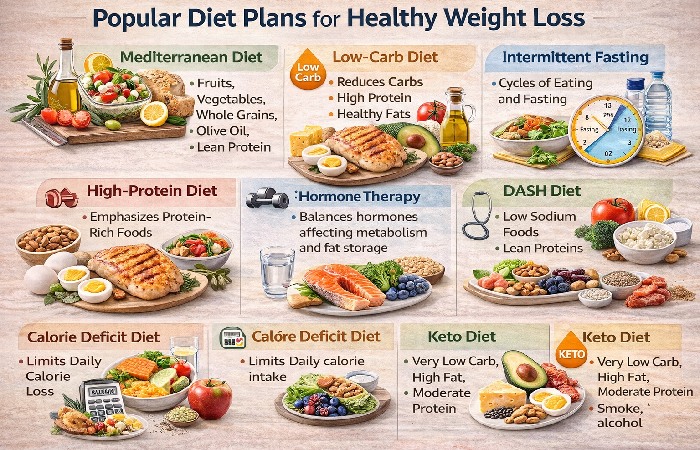
Choosing a structured diet plan can make weight loss more effective, organized, and sustainable. General diet plans focus on stable nutrition, portion control, and healthy eating patterns rather than an extreme calorie limit. These diets aim to improve metabolism, manage hunger, provide indispensable nutrients, and promote steady fat loss. The best diet plan depends on individual lifestyle, food preferences, and health goals.
Mediterranean Diet
Emphasizes fruits, vegetables, whole grains, olive oil, nuts, and lean proteins like fish; supports heart health and steady weight loss.
Low-Carbohydrate Diet
Limits carbohydrate intake and highlights proteins and healthy fats to help the body burn stored fat for energy.
Intermittent Fasting
Alternates between eating and fasting periods, helping reduce calorie intake and improve metabolic health.
Ketogenic Diet
A very low-carb, high-fat diet that places the body into ketosis, a state where fat is burned for fuel.
High-Protein Diet
Emphasizes protein-rich foods that increase roundness, reduce cravings, and help preserve muscle form.
DASH Diet
Designed to lower blood pressure, this diet highlights fruits, vegetables, whole grains, and low-fat dairy while limiting salt intake.
Plant-Based Diet
Focuses on plant-derived foods such as vegetables, fruits, legumes, nuts, and seeds, helping naturally reduce calorie intake.
Calorie-Deficit Diet
It involves consuming fewer calories than the body burns, which is an important principle of weight loss.
Tips for Busy Professionals on Weight Lose
Busy professionals often struggle with weight loss due to long working hours, irregular meal times, stress, and an imperfect time for exercise. Maintaining a healthy weight probably requires smart planning and simple lifestyle changes. Making meals at home helps avoid unhealthy fast food and overindulging. Selecting nutrient-dense foods like fruits, nuts, yogurt, and protein-rich snacks keeps energy levels stable throughout the day. Short workouts such as 15–20-minute home workouts, walking during breaks, or using stairs instead of elevators can effectively promote fat loss.
| Tip | How It Helps |
| Meal Prepping | Stops unhealthy last-minute food choices |
| Healthy Snacking | Controls starvation and decreases overeating |
| Short Home Workouts | Saves time while refining fitness |
| Walking During Breaks | Burns extra calories and reduces stress |
| Drinking More Water | Boosts metabolism and suppresses hunger |
| Taking Stairs | Adds daily physical activity naturally |
| Stress Management | Stops expressive and binge consumption |
| Proper Sleep Routine | Controls hunger hormones and recovery |
| Portion Control | Helps attain calorie intake |
| Limiting Sugary Drinks | Decreases empty calorie consumption |
Conclusion
Weight loss is a gradual journey that requires a stable approach combining nutritious eating, regular physical activity, proper hydration, quality sleep, and consistent lifestyle habits. Instead of dashing for quick fixes or extreme diets, focusing on sustainable, healthy routines transports long-term results. Small, reliable changes in daily habits can lead to significant developments in overall health, energy levels, and well-being. By setting realistic goals and staying committed, anyone can achieve and maintain a healthy weight while improving their overall well-being.
