
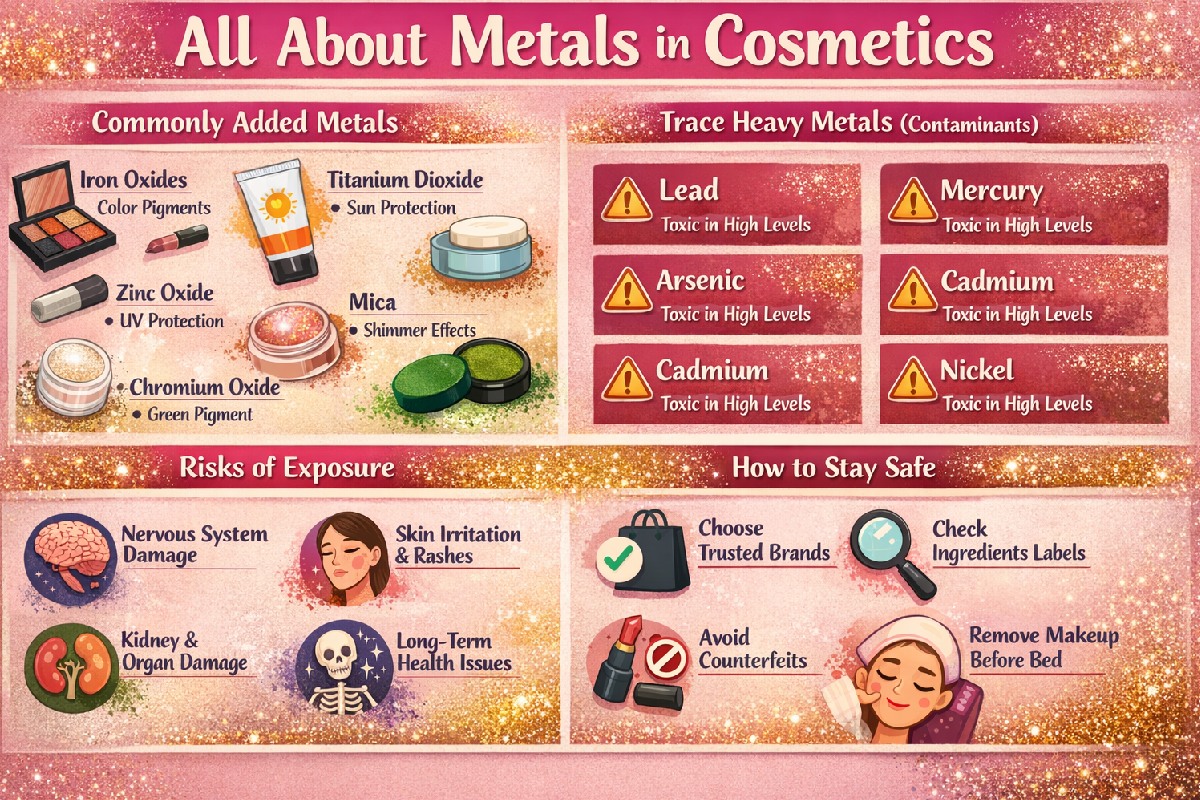
All About Metals in Cosmetics – Today, people are more curious than ever before about what’s in their skincare products, with great concern about whether the ingredients are natural. One ingredient that has raised some eyebrows is non-ferrous metals, as a number of people are concerned about the effects of metals in skincare on our health. Unfortunately, there isn’t a straightforward answer to whether metals are beneficial or harmful to the skin.
Some people are allergic to certain metals, so these metals would obviously have a negative effect on these individuals. If you’re curious about the effect that metal may have on our skin, read on to learn more.
Table of Contents
Heavy Metals Selected for Our Surveys
In beautifying safety surveys, certain heavy metals are specifically selected due to their possible poisonousness and frequent detection as scums in beauty and personal care products. These alloys are monitored since they may accumulate in the body over time and pose health risks with prolonged exposure. Selection is typically based on global safety rules, previous investigative findings, and the likelihood of pollution during pigment industrial and unprocessed material distribution.
Heavy Metals Commonly Selected for Surveys
Lead (Pb)
Frequently noticed in lipsticks and eye products due to pigment scums; related to nervous system toxicity.
Mercury (Hg)
Occasionally found in skin-lightening creams and dirty cosmetics; known for food and nervous injury.
Arsenic (As)
Naturally current in mineral-based ingredients; lasting exposure may cause skin and organ poisoning.
Cadmium (Cd)
Found in color pigments; connected to kidney damage and bone faintness with prolonged contact.
Nickel (Ni)
Shared trace contaminant from industrial tools and colors; may trigger allergic skin reactions.
Chromium (Cr)
Present in certain color seasonings; excessive exposure can cause skin irritation and complications.
An Overview of Heavy Metals in Cosmetic Products
Heavy metals in cosmetics are remnants that may be deliberately used in small controlled amounts or appear as unwanted byproducts during industrial processes. While some metal-based mixes can recover color, feel, and performance, certain heavy metals can be harmful when exposure exceeds safe levels.
| Heavy Metal | How It Enters Cosmetics | Common Products Affected | Possible Health Risks | Safety Status |
| Lead | Impurity in mineral pigments | Lipsticks, kajal, eyeliners | Nervous system damage, developmental issues | Limited; trace amounts allowed |
| Mercury | Preservatives (rare), pollution | Skin-lightening creams, mascaras | Kidney damage, skin rashes, nerve toxicity | Banned in many countries |
| Arsenic | Natural impurity in minerals | Face powders, basics | Skin irritation, organ toxicity, cancer risk | Strictly limited |
| Cadmium | Pigment pollution | Lipsticks, blushes, eye shadows | Kidney damage, bone weakness | Restricted substance |
| Nickel | Trace pollution from tools & colors | Eye makeup, powders | Allergic reactions, dermatitis | Allowed in very tiny traces |
| Chromium | Color additives, inorganic impurities | Eye shadows, colored cosmetics | Skin irritation, allergic reactions | Controlled usage |
Does Makeup Contain Metal?
Aluminum, nickel, arsenic, cadmium, mercury, and lead can all be detected in a number of cosmetics. The manufacturing processes of makeup will determine whether it contains metals or not. As far as lipsticks/lip glosses are concerned, 33 popular brands that were tested. Out of these, all 24 lip glosses and eight lipsticks contained a minimum of one toxic heavy metal. Fortunately, though, tests have demonstrated that the dermal penetration of heavy metals tends to be very low. Despite this, users of these products need to be careful when eating or drinking, as touching the cosmetic product and then touching food could lead to ingestion of the metal.
| Category | Metal / Mineral | Why It Is Used | Common Products | Safety Level |
| Added Deliberately | Iron Oxides | Deliver red, yellow, brown & black pigments | Foundation, lipstick, blush, eyeshadow | Safe in regulated amounts |
| Titanium Dioxide | White pigment & sun protection | Sunscreen, foundation, dense powder | Safe & skin-protective | |
| Zinc Oxide | UV protection & skin soothing | Sunscreen, BB creams, mineral makeup | Safe & gentle | |
| Mica (mineral-based) | Shimmer & glow effect | Highlighter, eyeshadow, shimmer powders | Safe when purified | |
| Chromium Oxide | Green color pigment | Eyeshadow, concealers | Safe in small quantities | |
| Trace Scums | Lead | Present as contamination in pigments | Lipstick, kajal, eye products | Harmful in high exposure |
| Arsenic | Natural mineral contamination | Face powders, foundations | Toxic in high quantities | |
| Cadmium | Pigment pollution | Lipsticks, bl |
Is there Metal in my Makeup?
There are various ways in which you can determine if your makeup is metal, the first being the use of a magnet. Quite simply, if your makeup sticks to the magnet, you can say with complete confidence that the makeup contains metal. Exposure to metals can have both immediate and long-term effects, and these effects can be chronic or acute. Chronic poisoning takes place when a person has been exposed to particularly small doses of an irritant over an extended time period. Acute poisoning takes place when a person is exposed to a high dose of heavy metals.
The Risks of Metal Exposure
Metal exposure can result in a number of health problems, including reproductive toxicity, neurotoxicity, and cancer. These issues can present themselves by way of direct or indirect exposure to metal. As a result, carcinogenesis can take place, which is a process in which cancer cells form. The areas most prone to cancer from metal exposure include the liver, lungs, and skin.
Neurotoxicity describes the nervous system being affected, which can result in a number of neurological disorders. These include schizophrenia, Parkinson’s disease, and Alzheimer’s disease.
Reproductive toxicity, on the other hand, refers to negatively impacted reproductive health. This can present itself in the form of miscarriages, reduced fertility, and birth defects.
| Metal | How Exposure Happens | Health Risks | Who Is Most Vulnerable | Long-Term Concerns |
| Lead | Dirty lipsticks, eyeliners, pigments | Headaches, fatigue, skin irritation | Children, pregnant women | Nervous system damage, developmental issues |
| Mercury | Skin-lightening creams, dirty cosmetics | Skin rashes, staining, and kidney strain | Sensitive skin users | Kidney damage, autoimmune system disorders |
| Arsenic | Mineral impurities in powders & basics | Skin annoyance, nausea, stomach pain | People with frequent contact | Organ damage, cancer risk |
| Cadmium | Pigment contamination in lip & eye products | Allergic responses, breathing irritation | Long-term cosmetic users | Kidney damage, bone weakness |
| Nickel | Trace pollution in pigments & tools | Soreness, itching, eczema, skin allergy | People with metal aversions | Chronic dermatitis |
| Chromium | Some color pigments | Skin sensitivity, annoyance | Sensitive skin types | Sensitive skin reactions |
Nickel in Skincare Products
Nickel is a metal that’s commonly used in skincare products to protect the skin from the sun. Unlike other metals, though, nickel is proven to be safe for use on the skin, as it helps reflect ultraviolet light. As a result, it’s best used in sunscreens, as well as skin products that act as antioxidants. That said, nickel allergies affect around 8% of people, meaning you should ensure you’re not allergic to nickel before applying nickel-based skincare products to your skin. As with any new skincare product, you should always do a patch test to ensure your skin doesn’t react badly.
Prices inIndia, UK, USA, And London of All About Metals in Cosmetics
| Region | Currency | Lipstick Price Range | Foundation Price Range | Eyeshadow Price Range | Compact Powder Price Range |
| India | INR | ₹250 – ₹2,500 | ₹400 – ₹4,500 | ₹300 – ₹3,500 | ₹250 – ₹3,000 |
| United Kingdom | GBP | £5 – £35 | £8 – £50 | £6 – £45 | £5 – £40 |
| United States | USD | $6 – $40 | $10 – $65 | $8 – $55 | $7 – $50 |
| London (Retail Avg.) | GBP | £6 – £38 | £10 – £55 | £8 – £48 | £6 – £45 |
Research All About Heavy Metals in Cosmetics
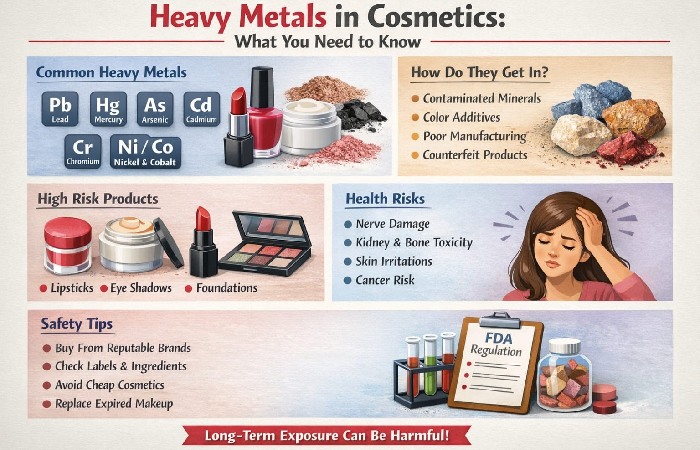
Research on heavy metals in cosmetics focuses on detecting toxic elements, assessing their sources, and assessing potential health risks from long-term exposure. Scientific studies show that heavy metals are typically present as trace amounts in the manufacturing of inorganic pigments and raw materials.
Key Research Findings
Heavy metals such as lead, cadmium, arsenic, mercury, and nickel are the most commonly seen contaminants.
Lipsticks, eye shadows, and face powders are more likely to be contaminated due to mineral-based pigments.
Long-term exposure may lead to bioaccumulation (the build-up of metals in the body over time).
Health risks linked to excessive exposure include:
Skin aversions and annoyance
Nervous system disorders
Kidney and liver injury
Hormonal imbalance
Many countries set allowable safety limits to reduce exposure to toxic substances.
Poor-quality, counterfeit, and unregulated cosmetics often exceed safe levels of metals.
Modern research mentions:
Advanced cleansing of raw materials
Stricter manufacturing rules
Even product safety is challenging
Clear classification for customer safety.
Organic Skincare Products
In order to avoid the risk of irritation, you should opt for organic skincare products. If you’re reacting negatively to cosmetics, it’s usually down to the number of chemicals in the product. Natural products are among the safest to use, with the least amount of people being irritated by such. That said, you need to bear your budget in mind, as organic skincare products can be expensive.
| Product Type | Typical Organic Ingredients | Key Benefits | Common Uses | Notes / Cautions |
| Organic Face Cleanser | Aloe vera, cucumber extract, Chamaemelum nobilis, honey | Gentle cleansing soothes skin | Daily face wash | Patch test if sensitive |
| Organic Moisturizer | Shea butter, coconut oil, jojoba oil, aloe | Hydrates, nourishes, recovers texture | Daily hydration | It can be heavy for oily skin |
| Organic Toner | Rose water, green tea, and witch hazel | Balances pH, revives skin | After cleansing | Alcohol-free toners are gentler |
| Organic Serum | Vitamin C (from fruit), hyaluronic acid (plant-derived), vegetal extracts | Stressed repair (brightening, anti-aging) | Before moisturizer | Use sunscreen with Vitamin C |
| Organic Sunscreen | Zinc oxide (mineral), non-nano titanium dioxide | UV protection | Daytime protection | Must reapply regularly |
| Organic Face Mask | Bentonite clay, turmeric, neem, oats | Deep clean, calm frustration | Weekly/self-care | Avoid if sensitive to botanicals |
| Organic Eye Cream | Caffeine (plant-based), cucumber, aloe | Reduces puffiness, hydrates | Under-eye care | Hyaluronic acid is good for aridness |
| Organic Lip Balm | Beeswax, shea butter, cocoa butter | Moisturizes & protects | Lips | Avoid synthetic flavors if sensitive |
Conclusion
Metals are shared ingredients in modern cosmetics and are often deliberately added to improve color, texture, and sun protection. Fixings like iron oxides, zinc oxide, and Ti dioxide are carefully safe when used within skillful limits. However, the presence of heavy alloys such as lead, mercury, and arsenic as scums can pose well-being risks if exposure is excessive or lengthy.
